The Guest-Ready Myth: Why a Perfect Room Is Not the Point
Guest-ready home routines start with a clear seat and a simple plan, so you can welcome people without resetting every room in the house.
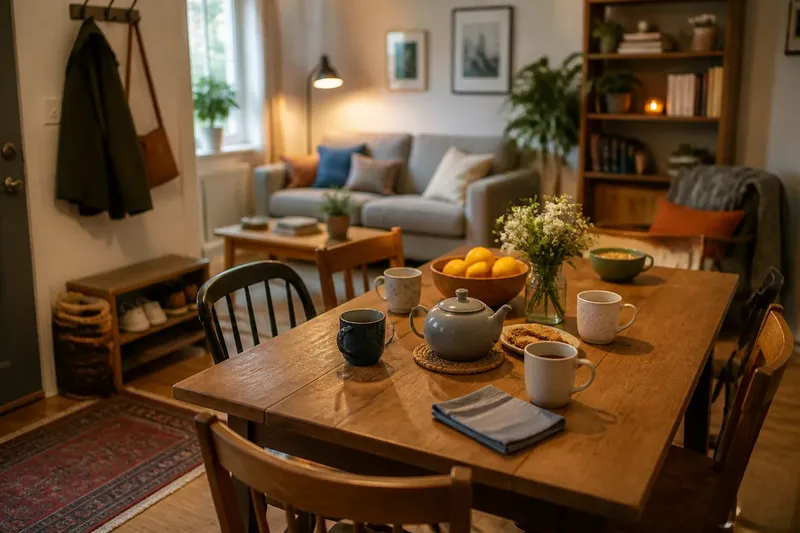
Guest-ready home routines do not require a spotless house; they need a place for people to sit and a shared plan for the time together. If someone is coming over this week, start with the room you will actually use, not the rooms a guest may never see.
That distinction changes the work. A full-room reset can consume the afternoon before a casual visit, while a clear chair, a usable table and a plan for what happens after the door opens make the gathering feel considered. Think of preparing for guests like setting a table: the useful pieces matter more than polishing the whole kitchen.
Choose the gathering
Begin by naming what the visit is for. A friend dropping by for tea needs a different setup from neighbors staying through dinner. The purpose determines the room, the seating and the amount of preparation that makes sense.
Write a plain sentence: “We’ll have coffee at the kitchen table,” or “We’ll eat in the living room and play a card game.” That sentence is a boundary as much as a plan. It tells you where to focus and gives you permission to leave unrelated spaces alone.
If the invitation is still flexible, make the format flexible too. Offer a short visit, a shared snack or a walk that begins at your door. Hosting does not have to mean a meal, a spotless home or an evening of continuous entertainment. A modest plan is easier to carry through, especially when people live in a home that is also being used for ordinary life.
Set the week’s scope
Several days ahead, choose the room and make a short list of what guests will need there. Keep the list tied to the visit rather than to a fantasy of how the whole home ought to look.
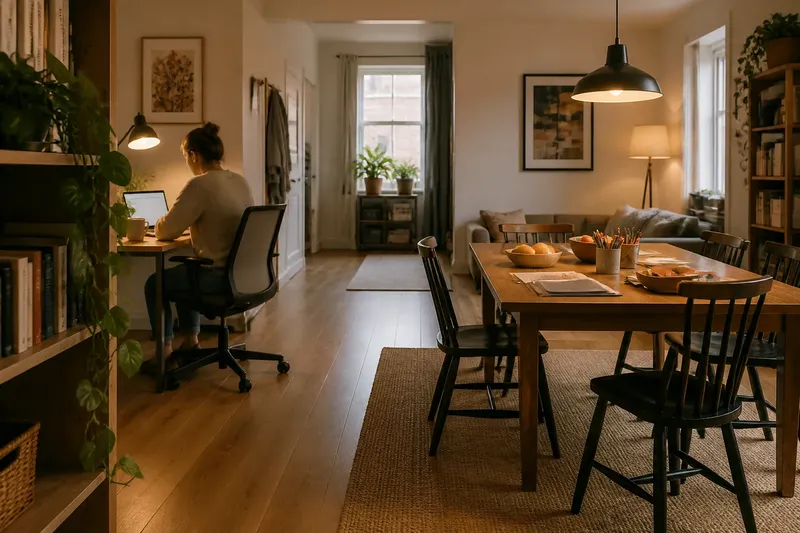
- Seating: Identify a clear seat for each expected guest, and decide whether a dining chair or kitchen stool can move in from another room.
- Surfaces: Clear one table or counter area for cups, plates or a shared activity.
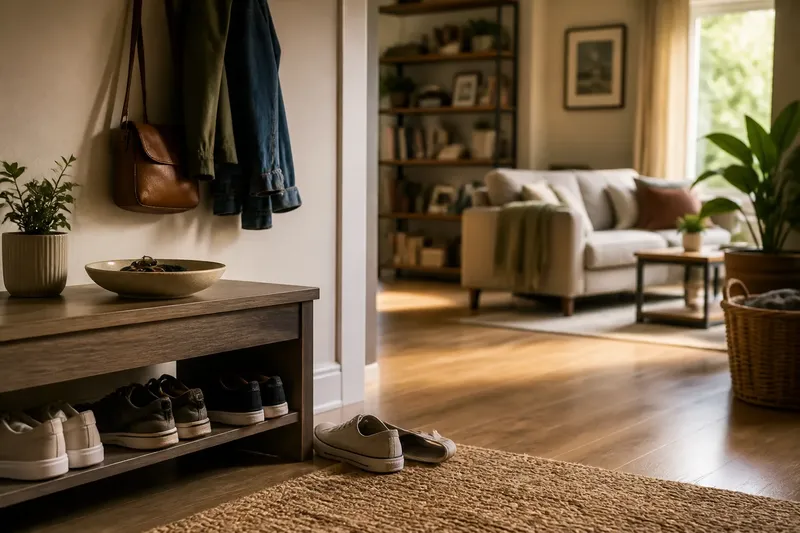
- Arrival: Decide where coats, bags and shoes can go without blocking a doorway.
- Refreshments: Choose a drink or simple snack that fits the visit and the people attending.
- Household needs: Note any access, food or timing details the guests have shared with you.
Then stop adding tasks. If the list expands into closets, bedrooms and every dusty shelf, ask whether the added work will change how the visit functions. If not, leave it out.
Say you have friends coming for soup on Saturday, and the dining table is covered with mail. Imagine setting aside one evening to sort the mail into a tray, clearing the table, and choosing two chairs from the kitchen for extra seating. The expected result is a place to eat and talk; the unopened closet can remain unopened. The point is not to disguise the home but to make the gathering’s shared space usable.
Prepare without spiraling
The day before, handle only tasks that remove a real obstacle. Put away items that occupy the seats or the surface you chose. Check that the route from the entrance to that room is clear enough to walk through comfortably. If you plan to serve food, make sure the dishes and serving tools you intend to use are available.
Give everyone who shares the home a defined, manageable role. One person might move shoes away from the entrance; another might choose a playlist or set out mugs. A request such as “Please clear this chair” is easier to act on than “Help get the house ready,” which can sound like an invitation to inspect every room.
For a relaxed visit, choose one simple activity or a natural point of connection: a pot of tea, a board game already on the table, or a walk after lunch. You do not need to fill every quiet moment. A plan gives the gathering a starting point, not a script that people must follow.
Use the arrival hour
When the visit is close, use a brief sequence that protects your attention. Finish the tasks that affect comfort first, then leave time to be present at the door.
- Clear the chosen seats and the surface guests will use.
- Set out the drink, snack or activity you have already chosen.
- Make a spot for coats and bags near the entrance.
- Put away anything in the gathering area that could spill, trip someone or interrupt the planned activity.
- Pause before the arrival time instead of starting a new cleaning project.
That last pause is part of hosting. If you are still scrubbing a room when the first guest arrives, the preparation has begun to compete with the reason for inviting people over. A little visible untidiness is usually less disruptive than a host who cannot leave the cleaning behind.
For a visit with children, pets or guests with particular access needs, adapt the room to the people coming. Move fragile objects out of the shared area or leave a wider route to the seats. Where a decision depends on product labels, manufacturer instructions or local rules, follow those directions rather than improvising.
What matters before guests arrive?
Which rooms should I clean?
Focus on the room guests will use and the route they will take to reach it. Other rooms can stay in their ordinary state unless guests will need them.
What if my home still looks messy?
Make the gathering area usable, then decide whether any remaining mess affects comfort or access. If it does not, you can welcome people without resolving it first.
How much food should I prepare?
Match the food to the visit you have agreed on, rather than turning a short catch-up into an elaborate meal. If guests offer to bring something, say what would be useful.
What if someone arrives early?
Let them into the part of the home that is ready and tell them what you are still finishing. A direct, friendly welcome works better than rushing to conceal ordinary household activity.
Keep the visit human
Once guests arrive, the plan can bend. If conversation settles around the kitchen table, there is no need to move everyone to the living room just because that was the first idea. If a game goes untouched, let it remain an option rather than treating it as a failed activity.
Share practical information without apologizing for the home. Point out where guests can put their coats or find water. If a room is private or simply not part of the visit, say so plainly. Clear expectations are kinder than a hurried tour designed to prove that every corner is ready.
Afterward, do only the closing work that makes the next ordinary household task easier. Put away food that needs attention, gather dishes in one place and return borrowed chairs when you have the capacity. The rest can wait. A guest-ready home routine is not a performance to maintain; it is a way to make shared time possible without demanding that daily life disappear first.
The next time you invite someone over, use the same simple question: where will we sit, and what will we share? That answer can guide your guest-ready home routines more reliably than a room-by-room inspection, while leaving space for a home to look lived in—and for you to enjoy the visit.