A Winter Evening, Arranged Around the Window
Plan a winter evening around the window by following the available daylight and placing one quiet activity where its changing light is easy to notice.
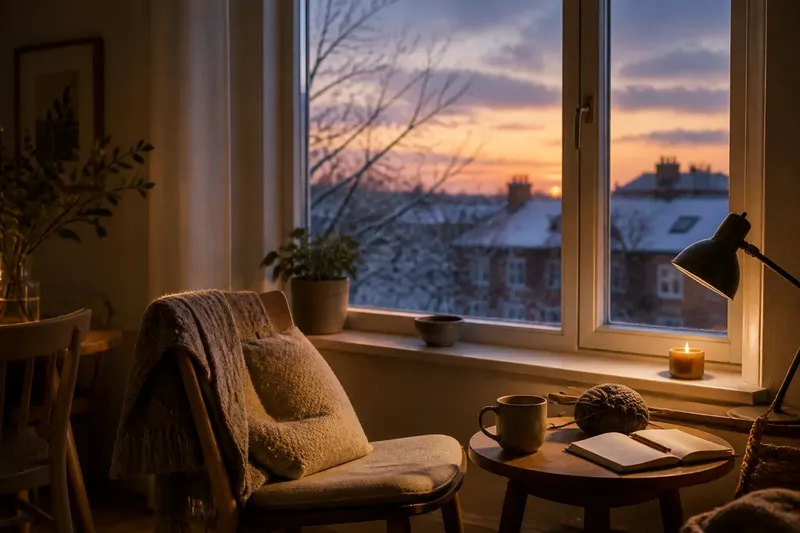
A winter evening arranged around the window begins with one simple decision: notice where the last useful daylight lands, then place a quiet activity nearby. The window is not a backdrop to decorate; it is a moving source of light that can shape where you read, mend, draw, or sit with a warm drink.
This seasonal room-planning exercise works with the room you already have. It does not require a new chair or a clear afternoon. A few minutes of looking, followed by a small adjustment, can make the shift from daylight to lamplight part of the evening rather than something that happens unnoticed.
Which window should I use?
Choose the window that gives you the most noticeable change in light during the part of the day when you are usually home. That may be the kitchen window over the sink, a living-room window facing a courtyard, or a bedroom window that catches a pale band of sky. The best choice is not necessarily the largest or sunniest one.
Look from the height where you might actually sit. A view from standing at the glass can differ from the view from a sofa, a dining chair, or a cushion on the floor. Notice what you can see without moving furniture: a patch of sky, branches, rooftops, a changing reflection, or simply the brightness fading across the room.
For a few evenings, pay attention around the time you expect to settle into a quiet activity. There is no need to track exact times. Ask whether the window holds a visible trace of outdoor light, whether the room brightens indirectly, or whether the view becomes dark before your usual evening begins. Choose the window that gives you something to notice, not one that demands you rearrange the whole household.
How do I read the winter light?
Watch the light from inside, without treating one evening as a fixed template. Cloud cover can soften a bright view; rain can turn the glass reflective; a clear sky may leave a distinct strip of color near the horizon. The seasonal pattern is useful precisely because it changes from day to day.
Notice three things: where daylight falls, how long the view remains legible, and what the room looks like after the view dims. A pale patch on the floor may move out of reach before you sit down. A window facing a tree may keep its shape in view after direct light has gone. A white wall opposite the glass may hold a gentle glow even when the window itself looks subdued.
Keep the observation light. You might make a small note on a scrap of paper, or simply remember, “The armchair catches the last glow,” or, “The table is bright earlier.” The purpose is to find a useful relationship between a place and an activity, not to create a record that becomes another household chore.
Where should the quiet activity go?
Place the activity where you can notice the window with a comfortable turn of the head, rather than facing the glass as if you must watch it continuously. A chair angled toward the view can suit reading or knitting. A small table beside the window can hold a sketchbook or a letter. If the sill is narrow, leave it clear and bring the activity to a nearby surface instead.
Match the activity to the light it needs. Reading fine print may call for a lamp even while daylight remains; watching the sky or drawing broad shapes may work well in softer light. Mending can be pleasant near the window earlier in the evening, then move under a task lamp as details become harder to see. A window-side place should make the activity inviting, not make your eyes strain.
Keep the arrangement modest. One chair, a stable surface, and the materials for one activity are often enough. Think of the window as a clock face that changes slowly, not as a spotlight that must illuminate everything. The activity can continue after the daylight has gone; the transition is the part worth noticing.
What if the room is small or shared?
Use a temporary arrangement rather than assigning the window to one person or purpose. A dining chair can turn toward the view for a quiet half hour, then return to the table. A tray can carry a book and pencil to a window seat and disappear into a cupboard afterward. In a shared room, the window can offer a moment without becoming someone’s permanent territory.
Make the route through the room as important as the view. Avoid placing a chair where it blocks a doorway, radiator, or the usual path between kitchen and sofa. If the window is above a radiator, leave space for airflow and avoid draping fabric over the heat source. A spot can feel peaceful without being tucked into an awkward or uncomfortable corner.
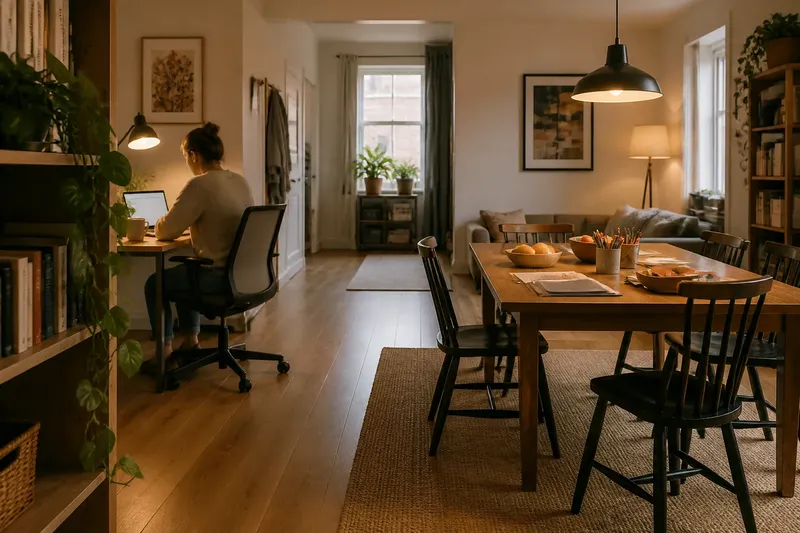
Say you share a narrow living room and the only useful window sits beside the dining table. You could turn one chair toward the glass after dinner, keep a small notebook and pencil in a drawer, and use that place to sketch the changing outline of a nearby tree. When the table is needed again, the chair returns to its usual position; the expected result is a brief, repeatable pause without taking over the room.
How can I make the place comfortable?
Start with the seat and the surface, not seasonal decoration. A cushion can soften a hard chair; a folded throw can be useful if the window area feels cool. Keep a mug on a stable table rather than a ledge where a passing elbow could send it down. Put reading glasses, yarn, or a pencil within reach so the activity does not require a series of trips.
Pay attention to glare and reflections. If a lamp shines directly onto the glass, the room may reflect more brightly than the outdoor view, especially after dark. A lamp placed to the side of the activity can light a page while leaving the window easy to glance at. Adjust the angle from your normal seat, since a solution that looks right while standing may create glare when you sit.
Window coverings can remain part of the arrangement. You may prefer to leave a clear section open while daylight fades, then draw curtains for privacy or warmth when the view becomes less useful. The point is not to keep the window exposed at all costs. It is to choose when the view matters and when comfort, privacy, or the rest of the household takes priority.
What questions come up?
Does the activity need natural light?
No. The activity can use a lamp from the start; the window’s changing light is there to notice, not to supply all the illumination. Choose task lighting that makes the activity comfortable, especially for close work.
What if my window faces a wall?
A view does not need a distant landscape. Watch the changing brightness on the wall, a reflection in the glass, or the way a nearby plant’s outline becomes less distinct. If the window gives you no comfortable point of attention, choose another one.
Should I move the furniture?
Try a small change before shifting heavy pieces: turn a chair, move a lamp, or bring over a tray. If a larger move might block a path or interfere with a heater, keep the existing layout and choose a nearby seat instead.
When should I close the curtains?
Close them when you want privacy, warmth, or less glare; leave them open while the view adds something to the activity. A useful arrangement can change during the same evening, just as the light does.
How do I keep it seasonal?
Let the arrangement change as the evenings change. When the last light begins to disappear earlier, move the activity closer to a lamp or begin it before the room darkens. When the daylight lingers, you might sit by the window a little longer or choose an activity that benefits from seeing more of the outdoor view.
Keep the adjustment easy to undo. A portable basket for knitting, a notebook that slides into a drawer, or a lamp that can be moved without disturbing shared furniture helps the arrangement remain a choice rather than a new rule. If another person needs the seat, the ritual can travel to a nearby spot and still include a glance at the window.
For a winter evening arranged around the window, the lasting benefit is not a perfect view or a specially styled corner. It is a small, deliberate pause: one quiet activity, placed where the changing light can be noticed, with enough flexibility to give the room back when the household needs it.