The Cue That Helps a Household Routine Begin
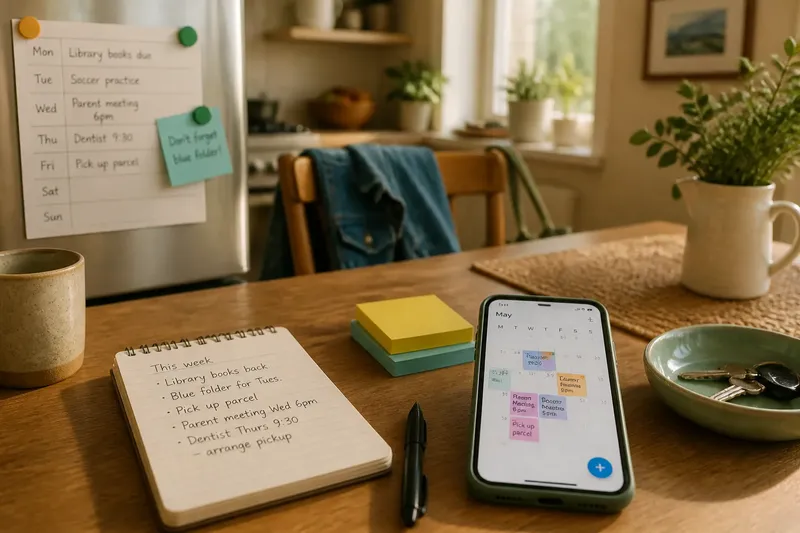
A cue-based household routine pairs one small task with a familiar daily signal, making it easier to remember without adding another demand to home life.
A household routine is easier to remember when it begins with something that already happens. If you want to clear the kitchen counter, connect that task to setting down the kettle after breakfast rather than relying on a vague promise to do it later. The cue gives the task a place in the day; keeping the task small gives it a chance to fit.
Choose a visible cue
A useful cue is specific, familiar, and easy to notice. “After dinner” can mean different things in a busy home. “When I put my plate beside the sink” points to a clear moment and a particular person’s action.
Look for an ordinary event that already belongs to the person expected to do the task:
- When the coffee maker finishes, rinse the mug you used.
- After hanging up a coat, return one stray shoe to the rack.
- When you switch off the living-room lamp, fold the blanket on the sofa.
- After feeding the cat, check whether the food scoop is back in its container.
The cue should not depend on a sound or event that is easy to miss. A timer may be useful for some households, but it can become background noise. A physical action—closing a cabinet, putting away a lunch bag, or taking off shoes—often makes a more dependable prompt because it is already part of the person’s routine.
Keep the task tiny
A routine can lose its footing when the cue leads to a whole project. “After breakfast, clean the kitchen” leaves room for a long list: dishes, counters, leftovers, floor. That is not one small task; it is several jobs bundled together.
Choose an action with a clear stopping point. Wipe one counter. Put the clean cutlery away. Move the mail from the dining table into its sorting tray. The task should be easy to finish even when the morning is crowded, not a promise to keep working until the room looks complete.
Think of the cue as a hook by the door: it gives one small thing a place to hang, rather than asking you to carry the whole household in your arms. A short task can still be useful. Its purpose is to create a repeatable opening, not to solve every mess in one pass.
Fit the cue to the person
A cue works best when it belongs to the person who will act on it. In a shared home, assigning a task to “everyone” can make its starting point unclear. Decide who owns the routine, or agree on a cue that naturally follows a shared action.
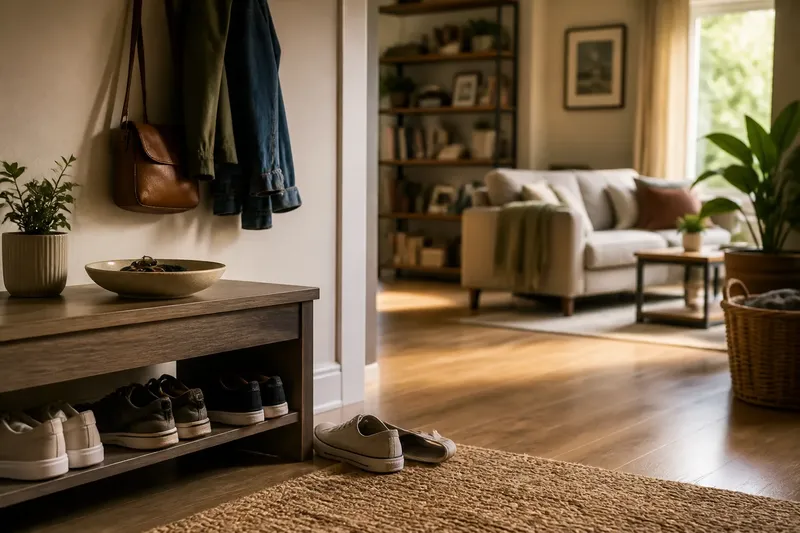
Say one housemate wants the entryway to stay easy to walk through. They could choose this pairing: after placing their keys in the bowl, put away one pair of shoes left near the door. The starting point is visible, the action is limited, and the expected result is a little more clear floor—not a spotless entryway. If another person’s shoes remain, that does not erase the usefulness of the routine.
For children or people with different schedules, a cue may need to be more visible than verbal. A laundry basket beside the bedroom door can remind someone to bring clothes down when leaving the room. Keep the object in a place where it helps without blocking a walkway or becoming another thing to manage.
Make room for real days
Household rhythms shift. A morning cue may disappear during a school break; an evening task may be awkward on nights when someone works late. A routine should bend around the household, not demand that everyone rearrange the day to preserve it.
If the usual cue disappears, choose a nearby alternative. If clearing the lunch dishes after school stops working because no one is home at that time, the task might instead follow the first snack. Keep the task itself unchanged while changing its anchor. That makes the adjustment easier to see and avoids adding several new rules at once.
It also helps to decide what counts as enough. A routine to reset the dining table might mean returning dishes to the kitchen and leaving the table ready for the next meal. It need not include sorting every paper in the room. A clear finish line reduces the chance that a small cue turns into an open-ended chore.
When should a cue change?
What makes a cue too vague?
If you have to interpret when it applies, it may not be clear enough. Replace “later” or “before bed” with a specific event you can notice, such as putting your phone on its charger or closing the pantry after dinner.
What if the cue is easy to forget?
Try tying the task to a more visible action in the same part of the day. You can also place a relevant object where the cue occurs, provided it does not obstruct the space or create a new household nuisance.
What if the routine keeps growing?
Return to one action with a definite stopping point. If the cue now seems to trigger a string of extra jobs, choose the single task that matters most and leave the rest outside this routine.
Can several people share one cue?
Yes, if everyone understands the same signal and knows what action is theirs. For a shared task, a cue such as putting away the last dish may prompt the next person to wipe the counter, but make the handoff explicit rather than assuming someone will notice.
Notice the friction
When a routine slips, treat that as information about its design rather than a verdict on anyone’s character. The cue may be hard to notice, the task may be too broad, or the person may not control the moment it depends on. Change one part at a time so the source of the friction stays apparent.
A cue-based household routine is most useful when it asks for little and starts at a moment the home already provides. Try pairing one small task with one unmistakable action, then watch whether the pairing feels natural over ordinary days. If it does not, adjust the cue or shrink the task until the routine belongs in the life you actually have.